
The Upturned Glass ( 1947 ) Australian Daybill & One Sheets

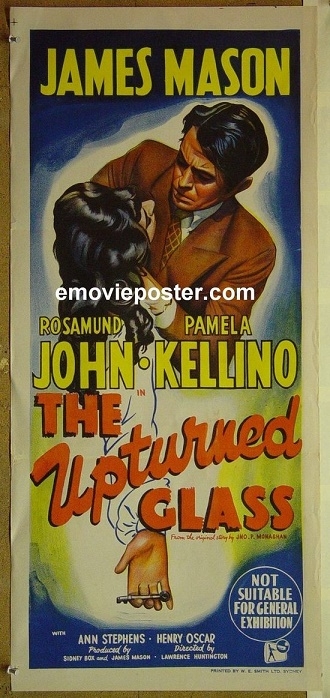
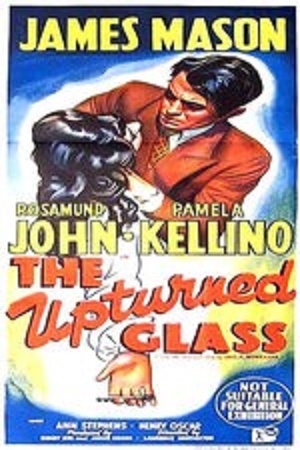
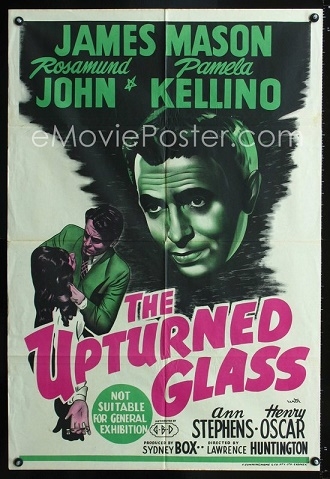 The Upturned Glass ( 1947 ) Any thoughts on the two styles ?
0
Get In Touch

The Upturned Glass ( 1947 ) Any thoughts on the two styles ?

Comments
No the colour doesn't matter.
Very observant and correct. Now we are comparing the daybill ( two top images ) to the one sheet and the colour doesn't figure at all in the interesting printing history of these two styles of posters.
My tuppence worth
And there is still no fucking glass
True about James Mason and very observant of you to notice but not what I am after.
There probably is a rational explanation for the title of the film.
Terrific Ves. Yes the distributors are not the same but yet they are the same.
One Sheet - Distributed by GBD
Daybill still too small to see, but I am sure I have that logo on many of my posters, just too lazy to look!
Logo showing the J. Arthur Rank gong used at the beginning of General Film Distributors ( GFD ) British films in 1948, but GFD isn't the Australian film distributor of the film.
Both the Australian daybill and the Australian one sheet are from the Australian first release in 1948 due to the Not Suitable For General Exhibition censorship rating changing to Not Suitable For Children that year.
This is what I believe happened with the printing of the two posters. Firstly I wish to state the one sheet was printed by F. Cunninghame and the daybill was printed by W.E. Smith, which was common practice for two different printers to be given the printing of daybill and one sheet for the same film, when one would have thought the same printer would do the printing work of the two.
The film was distributed in Australia by Gaumont British Distributors with physical distribution through 20th Century Fox. An abbreviated GBD credit always appeared on the Australian posters from the 1930's to this time. It appears in 1948 all the J. Arthur Rank General Film Distributors product released in Australia through GBD was altered on all the Australian posters to just show the Rank gong logo, possibly at the request of the Rank people. The Australian one sheet was printed with the GBD logo, but the daybill was either printed slightly later or altered at the last minute to have the Rank logo appear on it.
The Rank product continued to be released in Australia by GBD through 20th Century Fox, with the Rank logo appearing on the poster artwork, until around 1950 when British Empire Films took over the Australian distribution of Rank product. The BEF released posters had the Rank and the BEF logos appearing side by side on the artwork. Ernest Turnbull who owned GBD continued to release non Rank product in the 1950's through British Dominions Films, with British Dominions Films released by 20th Century Fox appearing on the very bottom of the daybill posters.